

Complaining doesn’t shrink your brain, but what it actually does is worse
The real neuroscience behind the viral claim, and 4 proven ways to reverse the damage

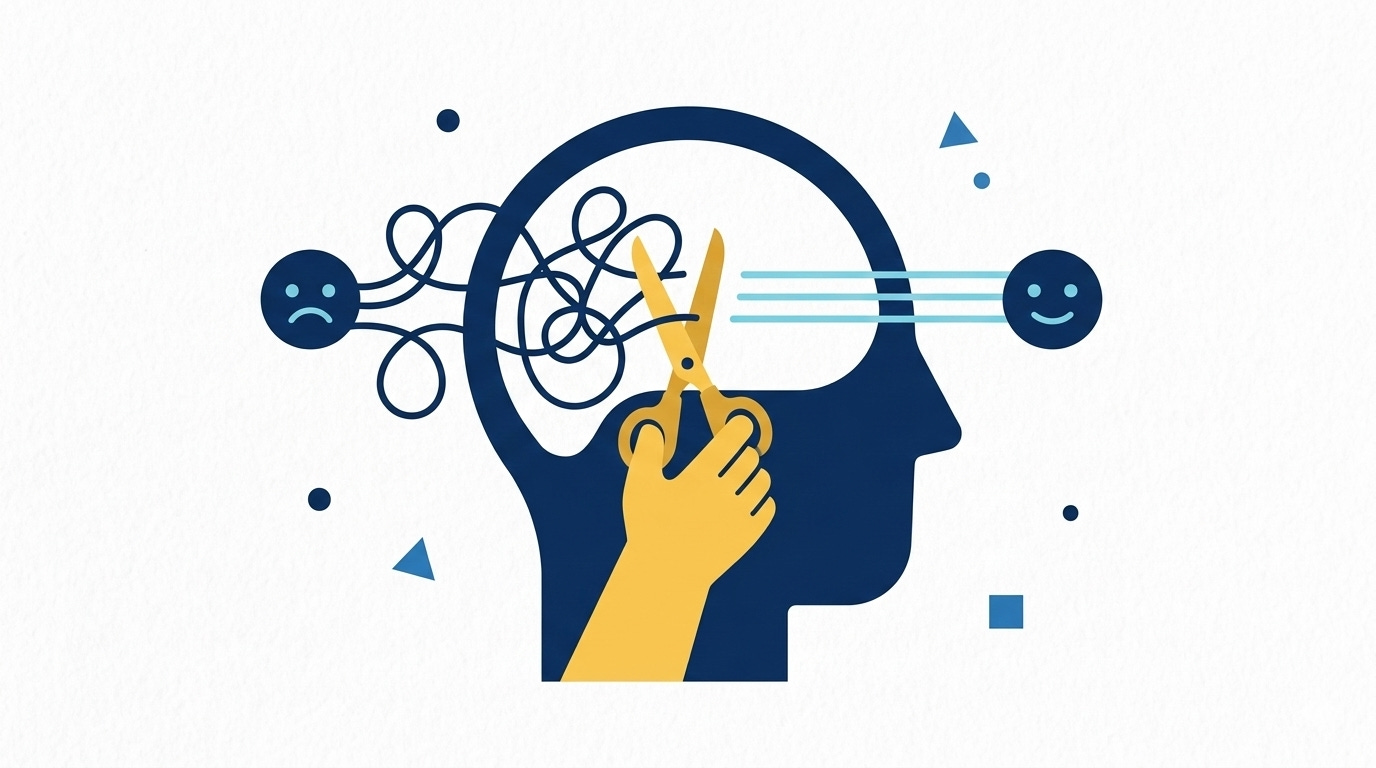
Hey Kwik Brain,
You’ve seen the headlines. “Complaining rewires your brain for negativity.” “30 minutes of complaining shrinks your hippocampus.” A Stanford study supposedly proved it all.
There is no Stanford study.
The claim went viral anyway, shared by the World Economic Forum, millions of LinkedIn users, and countless wellness influencers. And here’s the uncomfortable part: the underlying science is real. Just not the way most people think.
In today’s newsletter, you’ll learn exactly what repetitive negativity does to your brain, where the viral myth came from, and four research-backed strategies that can reverse the damage.
The myth that won’t die
The whole thing started in 2012. Entrepreneur Trevor Blake published a book called Three Simple Steps, which included a loose claim about complaining and the hippocampus. A Fast Company article picked it up. Then Travis Bradberry’s TalentSmartEQ piece amplified it further, attributing findings to “research from Stanford University.”
The Neurocritic traced the citation chain in 2016. No Stanford study on complaining and hippocampal shrinkage exists. The citation points nowhere. It’s a ghost reference that got copy-pasted across the internet until everyone assumed someone else had verified it.
The myth is clean. Tidy. Easy to share. The real science is messier, and far more useful.
What chronic negativity actually does to your brain
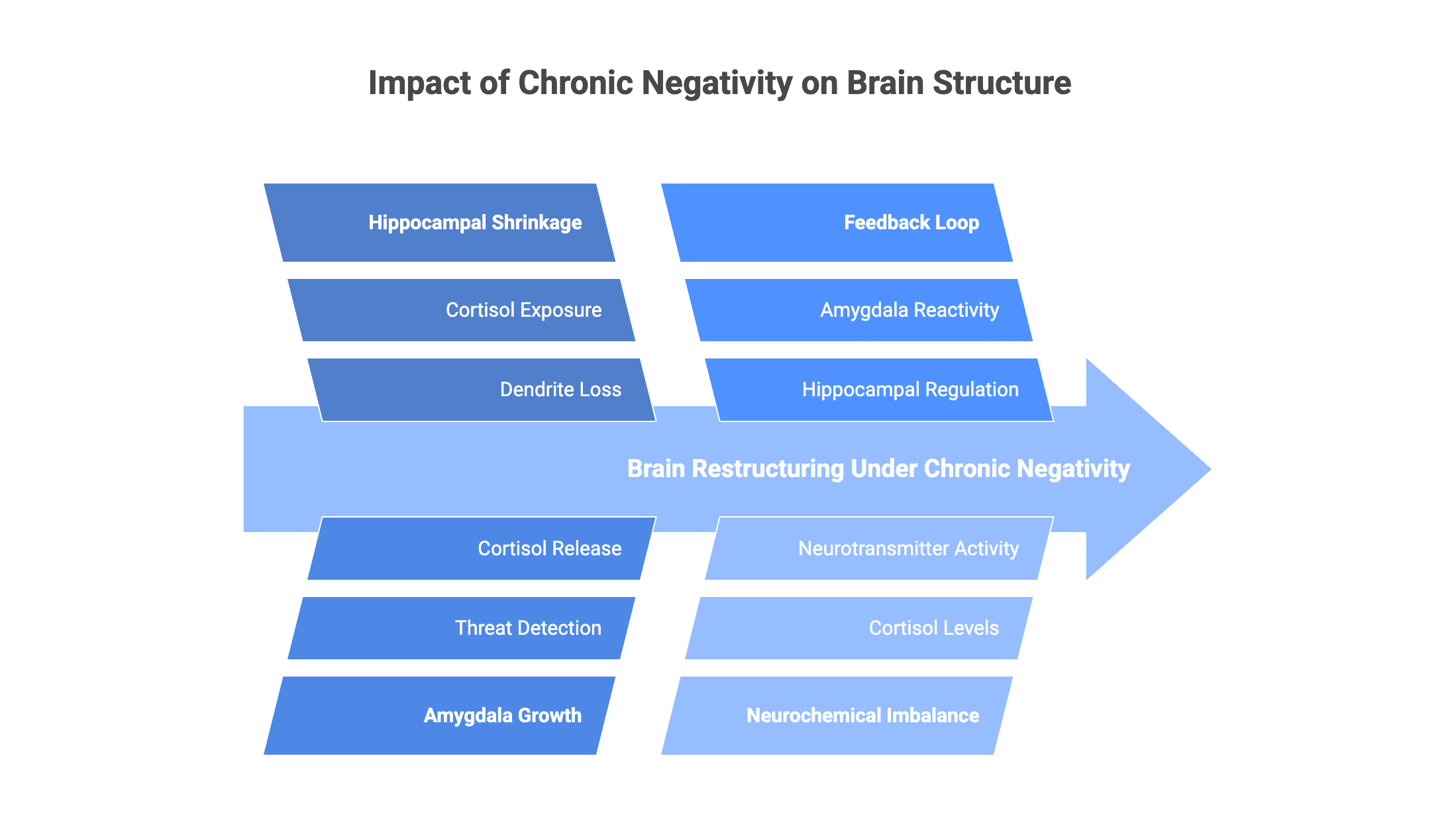
The hippocampus does shrink under chronic stress. That part is accurate. Neuroscientist Robert Sapolsky’s glucocorticoid research demonstrated that prolonged cortisol exposure damages hippocampal neurons, the very cells responsible for memory consolidation and emotional regulation.
A 2017 meta-analysis confirmed it across hundreds of patients: people with major depression, a condition defined by chronic negative thought patterns, show measurably smaller hippocampal volumes compared to healthy controls.
The mechanism matters. Cortisol floods the hippocampus during sustained stress. Over time, this kills dendrites, the branching extensions neurons use to communicate. Fewer dendrites means fewer connections. Fewer connections means weaker memory, slower learning, and less emotional control.
But the story doesn’t stop at the hippocampus.
Your amygdala grows while your hippocampus shrinks
Here’s what most viral posts leave out. Chronic stress doesn’t just shrink one brain region, it reshapes the entire stress circuit. While the hippocampus loses volume, the amygdala, your brain’s threat-detection center, gains it.
This creates a feedback loop. A larger, more reactive amygdala detects threats faster and triggers cortisol release more aggressively. A smaller hippocampus has less capacity to regulate that response. The brain becomes wired to perceive danger everywhere and struggle to calm down afterward.
This is the real damage. Not “complaining shrinks your brain.” It’s that chronic negative thought patterns restructure the balance between your memory center and your fear center.
Repetitive negative thinking: the actual culprit
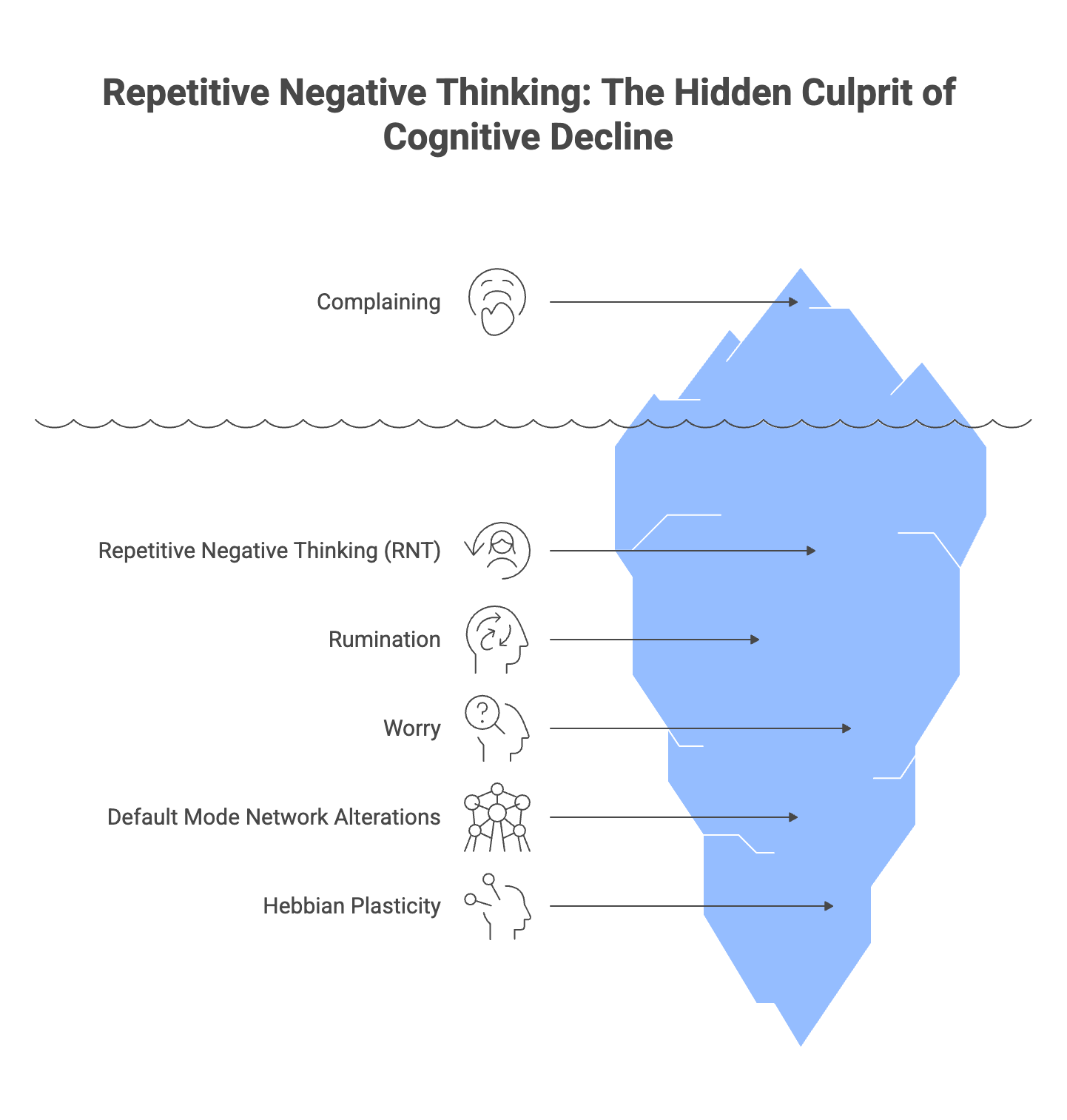
Complaining isn’t the problem. Repetitive negative thinking is.
Neuroscientists use this term, abbreviated RNT, to describe the pattern of looping through the same worries, regrets, and criticisms without resolution. Rumination (”why did that happen?”) and worry (”what if this happens?”) are its two main forms.
Demnitz-King and colleagues at UCL found that higher levels of repetitive negative thinking predicted faster cognitive decline in older adults, independent of depression or anxiety diagnoses.
A separate fMRI study by Puccetti showed that people who engage in more daily repetitive negative thinking display altered connectivity in the default mode network, the brain system that activates when you’re not focused on a task. Their brains literally process rest differently.
The default mode network research on rumination tells a consistent story: depressed individuals who ruminate show hyperconnectivity in their default mode network. Their “idle” brain stays locked in negative loops instead of shifting to creative or restorative processing.
This aligns with Hebbian plasticity, the principle that neurons that fire together wire together. Every time you replay a negative thought pattern, you strengthen the neural pathway for that pattern. Over weeks and months, the groove deepens.
The good news: your brain can reverse this
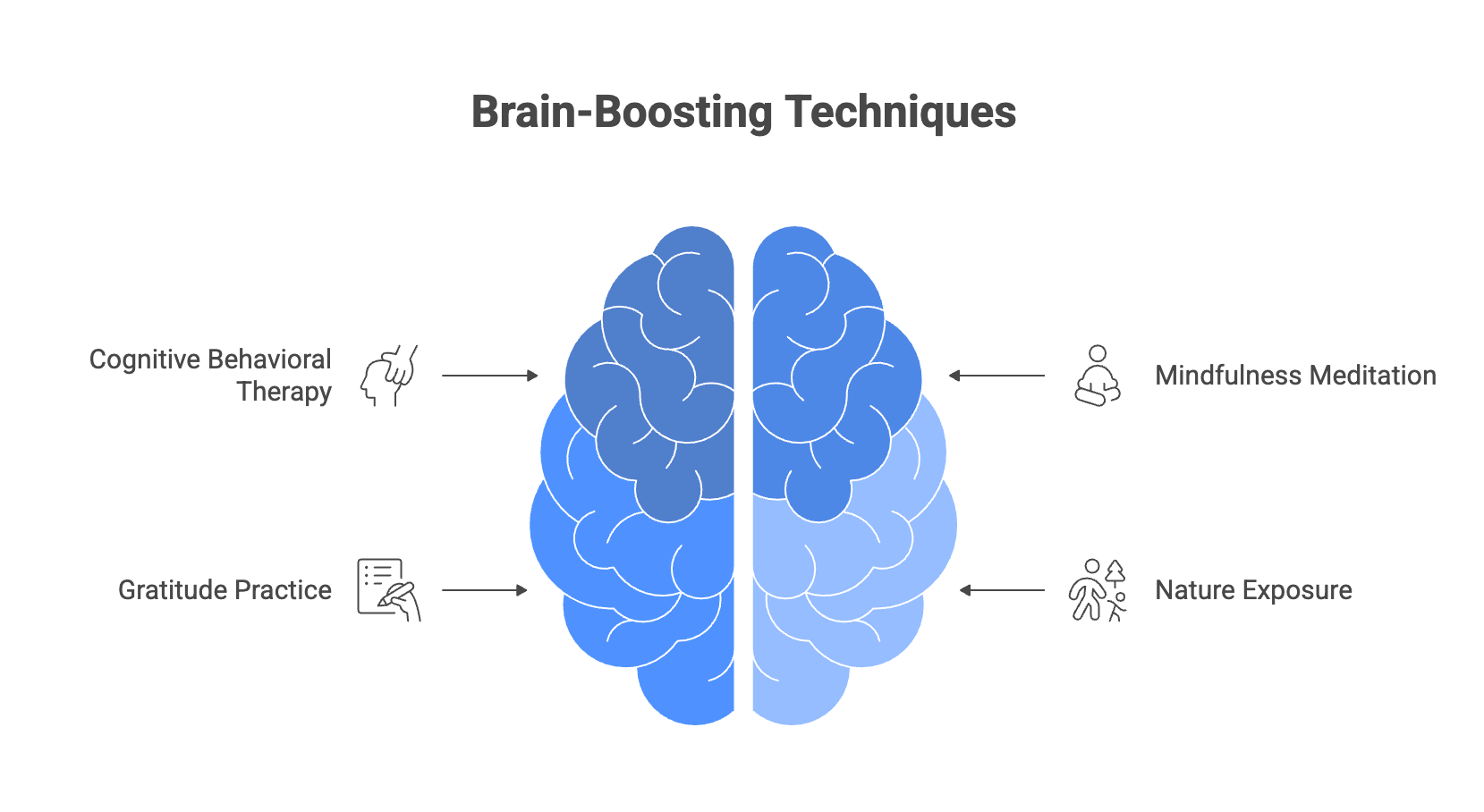
Neuroplasticity works both ways. The same mechanism that wires your brain for negativity can rewire it for something better. Four interventions have strong imaging evidence behind them.
1. Cognitive behavioral therapy changes brain circuits
A 2024 Stanford study (a real one this time) showed that CBT strengthened connectivity in brain circuits associated with cognitive control of emotions in patients with depression. Earlier work by Månsson in 2016 found similar structural brain changes after CBT in a randomized controlled trial.
The takeaway for non-clinical populations: learning to identify and reframe negative thought patterns produces measurable changes in brain wiring. You don’t need a diagnosis to benefit from the core skill.
2. Mindfulness meditation grows your hippocampus
Britta Hölzel’s 2011 study at Massachusetts General Hospital remains one of the most cited findings in contemplative neuroscience. After just eight weeks of mindfulness-based stress reduction (MBSR), participants showed increased gray matter density in the hippocampus and decreased gray matter in the amygdala.
Eight weeks. That’s the same hippocampus that chronic stress shrinks, and the same amygdala that chronic stress enlarges. Mindfulness pushes the ratio back in the right direction.
3. Gratitude practice shifts neural activity
Kini and colleagues published a 2017 fMRI study showing that gratitude letter-writing produced lasting changes in medial prefrontal cortex activity, even when measured months after the intervention ended. Participants who wrote gratitude letters showed greater neural sensitivity to positive experiences over time.
This isn’t “think happy thoughts” advice. The imaging data shows that repeated gratitude practice recalibrates the brain’s sensitivity to reward signals.
4. Nature exposure reduces rumination
Bratman’s 2015 PNAS study found that a 90-minute walk in nature reduced both self-reported rumination and neural activity in the subgenual prefrontal cortex, a region associated with repetitive negative thought. Urban walks of the same duration produced no such effect.
Ninety minutes in a natural environment. Measurable reduction in the brain activity that drives negative thought loops.
Your action plan
This week, pick one.
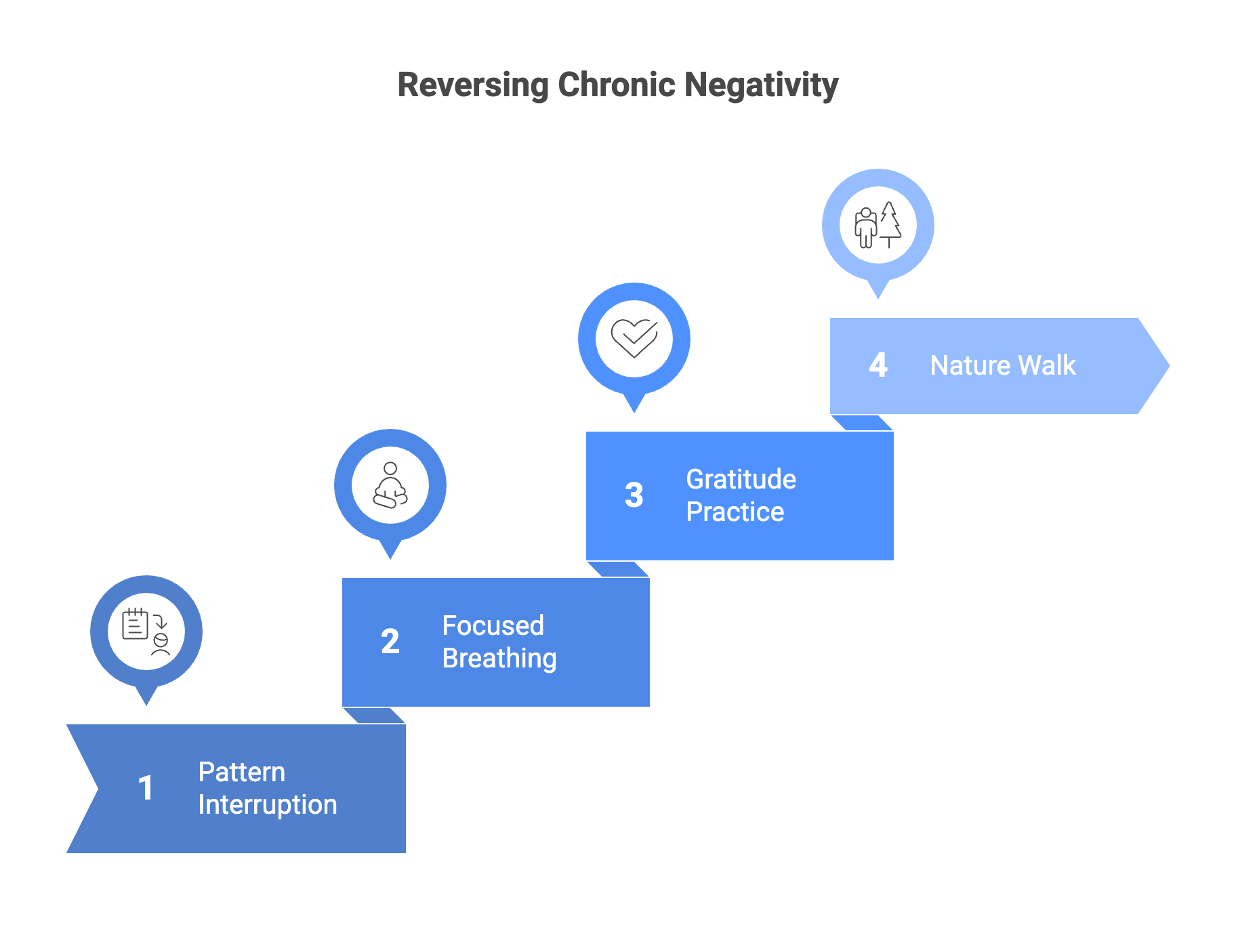
If you catch yourself in a thought loop: Write down the thought. Ask yourself: “Is this solving a problem right now, or am I replaying something I can’t change?” This is the core CBT skill, pattern interruption through conscious awareness.
If you want to build a daily practice: Start with 10 minutes of focused breathing. Don’t judge wandering thoughts, just notice and redirect. The Hölzel research showed structural brain changes at eight weeks of consistent practice.
If you want the lowest-effort entry point: Write three specific things you’re grateful for before bed. Not vague positivity. Specific moments, people, or outcomes from that day. The Kini fMRI data suggests this recalibrates your brain’s reward sensitivity over time.
If you have 90 minutes this weekend: Take a walk somewhere green. Not a city park with traffic noise. Somewhere your default mode network can shift out of threat-scanning and into restoration.
What’s real vs. what’s myth
Supported by research: Chronic stress shrinks the hippocampus and enlarges the amygdala. Repetitive negative thinking alters default mode network connectivity. These changes correlate with worse memory, emotional regulation, and cognitive decline. CBT, mindfulness, gratitude, and nature exposure all show measurable reversal effects in brain imaging.
Not supported by research: “A Stanford study proved complaining for 30 minutes shrinks your hippocampus.” No such study exists. Complaining as a specific behavior has never been isolated in neuroimaging research. The viral claim conflates casual venting with clinical patterns of chronic rumination.
The distinction matters. Venting to a friend about a rough day is not the same as spending hours replaying the same grievance. One is social bonding. The other is a neural habit that, over time, restructures your stress circuitry.
The brain you have right now is the product of the thought patterns you’ve been running. The brain you’ll have next year depends on the ones you choose to strengthen starting today.
Bonus reading
Why Zebras Don’t Get Ulcers, Robert Sapolsky, the definitive guide to how chronic stress damages the body and brain
Positive neuroplasticity training, Rick Hanson, evidence-based methods for hardwiring positive mental states
Once again the applied neuropsychologist gifts us with a great article with some really interesting and amazing results. Best of all it's written for people who really want the information rather than in journal- speak. Really appreciate the effort.
P.S. anything coming on ADHD?
Loved this article! I didn’t need a study to tell me this ~ years on the trail already did.
But it’s fascinating to see the science catching up to something many of us have felt intuitively.
Nature changes the conversation happening inside our minds.