

3 Ways to Use AI Without Losing Your Mental Edge
Keep your brain firing while ChatGPT does the grunt work


Hey Kwik Brains,
You ask ChatGPT to explain a concept you are trying to learn. It gives you a clear answer. You read it, nod along, and close the tab feeling like you understand. Two hours later, someone asks you about it. You freeze. The explanation was there this morning, but your mind is blank.
MIT just quantified this. ChatGPT users showed weaker neural connectivity than people using their brains alone. Same thing happened with GPS users. Their hippocampal function collapsed because the device handled spatial memory. AI is doing it to your executive function.
You cannot stop using AI without falling behind. But you cannot keep treating it like a vending machine either. Insert prompt, receive answer, forget immediately.
The problem is not the tool. The problem is how you are using it.
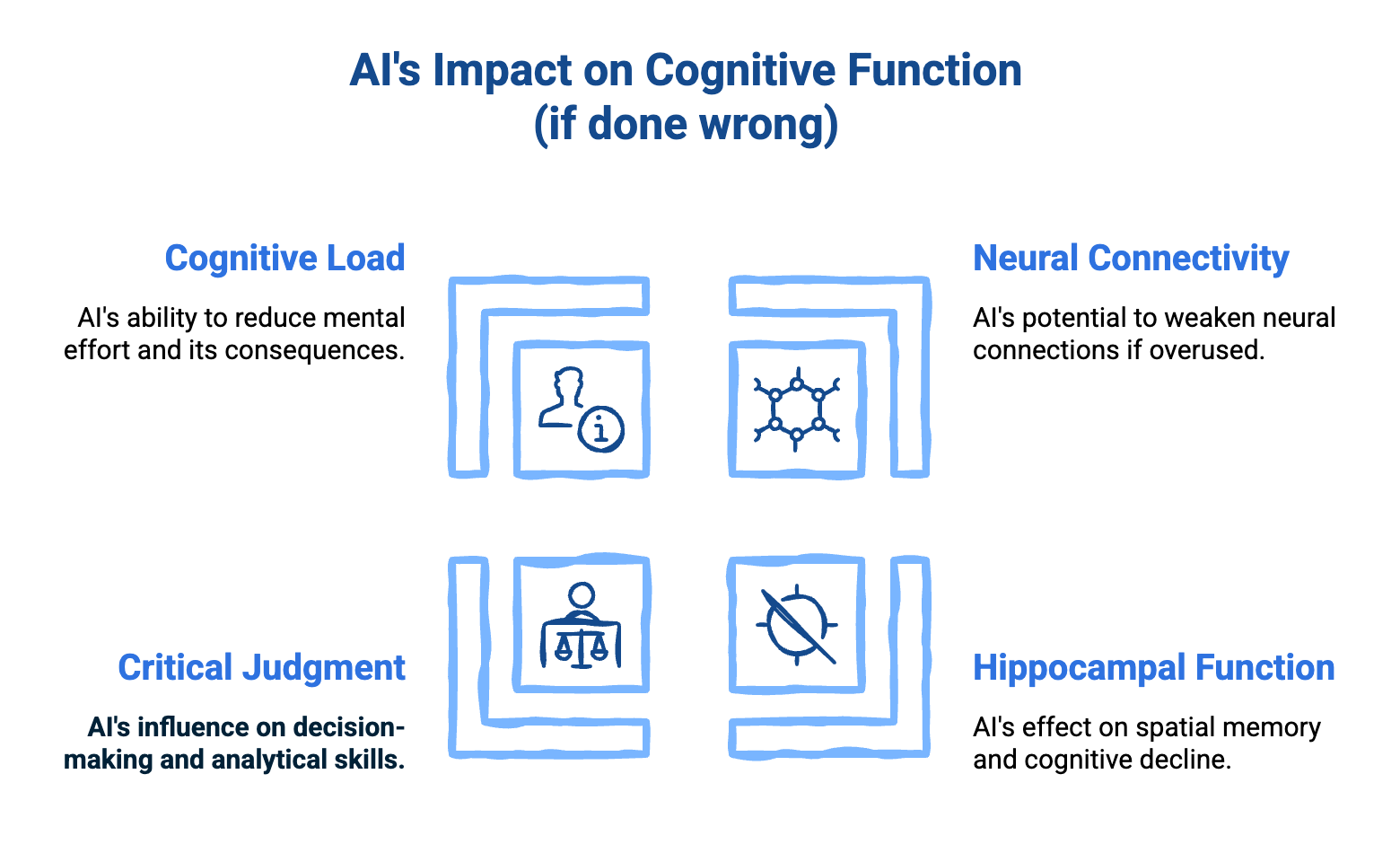
Microsoft tracked teams for six months. The ones using AI as a “doer”, pure task executor, showed measurable declines in critical judgment. The ones using AI as a “thinker”, a sparring partner that challenged their assumptions, stayed sharp. Same tool. Opposite outcomes.
Here is what happens. AI reduces cognitive load. That should free up mental bandwidth for deeper thinking. But most people do not reinvest that bandwidth. They just zone out. The energy you saved by not formatting the deck or writing the first draft evaporates instead of getting channelled into what actually matters, which is pressure-testing the logic, finding the holes, encoding the insights.
I wrote about this pattern earlier. Your team stopped questioning AI six months ago. They treat confident answers as gospel. That is the trap. The smoother the AI output, the less your brain fires.
Three habits flip this. They force you to use AI as a thinker, not a doer.
Hi, I’m Kamil Banc, founder of AI Adopters Club. I was excited when Jim invited me to write this piece because this question, how do we use AI without rotting our brains, is what I’ll be tackling at Limitless Live alongside other AI experts. If that speaks to you, grab your ticket. I’ll see you there.

Rule one: never start with a blank prompt
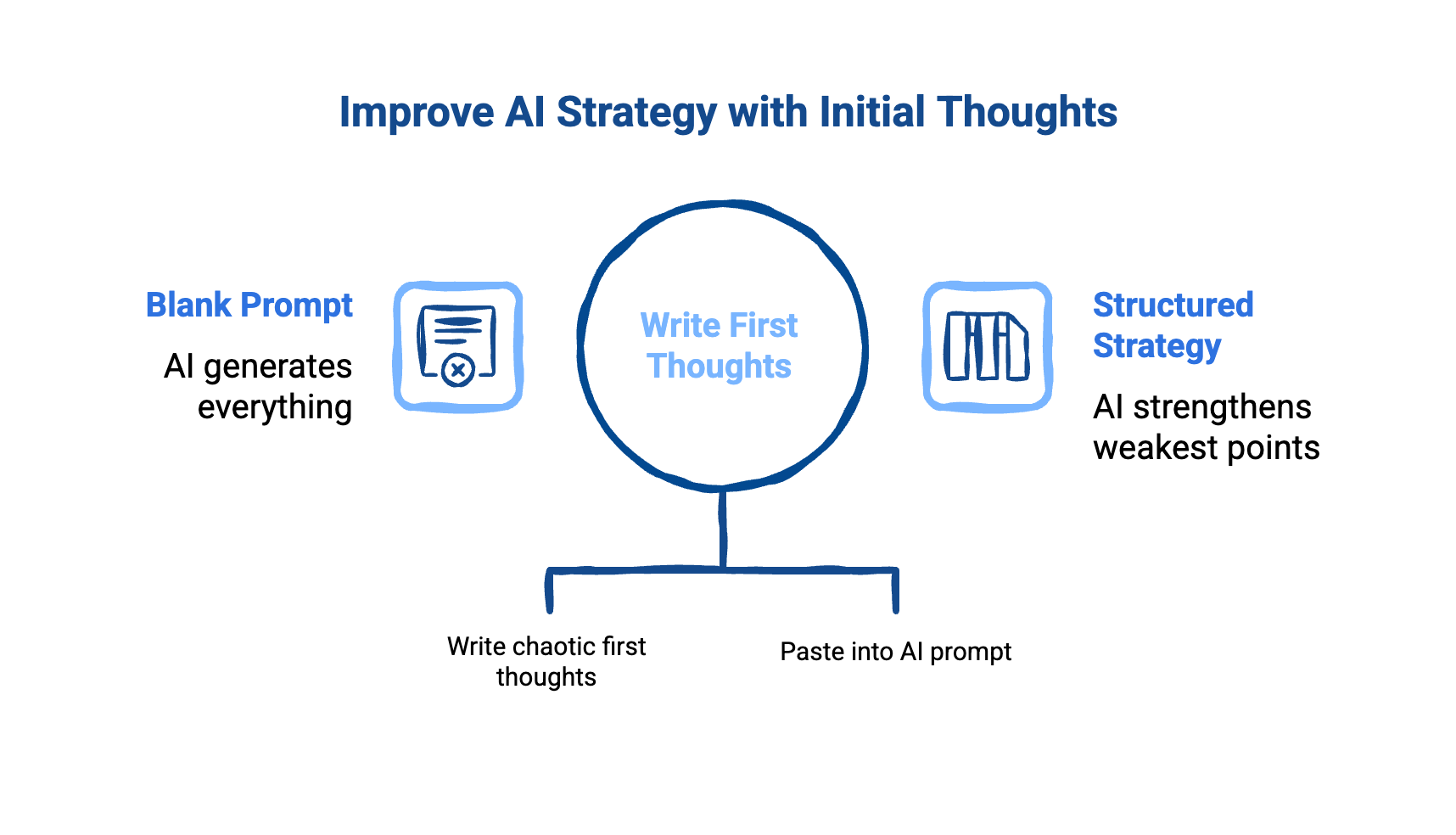
Most people open ChatGPT cold. “Explain quantum physics to me.” Zero input. The AI generates everything. Your brain contributes nothing.
Before you touch AI, write your chaotic first thoughts for two minutes. Learning a new language? Write this mess:
“Want to get conversational in Spanish for my trip in 3 months. Tried apps before but forgot everything. Need to focus on practical phrases, not grammar rules. Should I start with present tense? Or just common expressions? Not sure how to structure daily practice.”
Now paste it:
Here’s my rough thinking on learning Spanish in 3 months. Structure this into a learning plan, identify what I’m missing, and suggest how to make it stick: [paste your brain dump]You forced your neural circuits to fire first. Research backs this. Competitive advantage is not what you access, it is how you frame the question.
Rule two: make the AI fight you
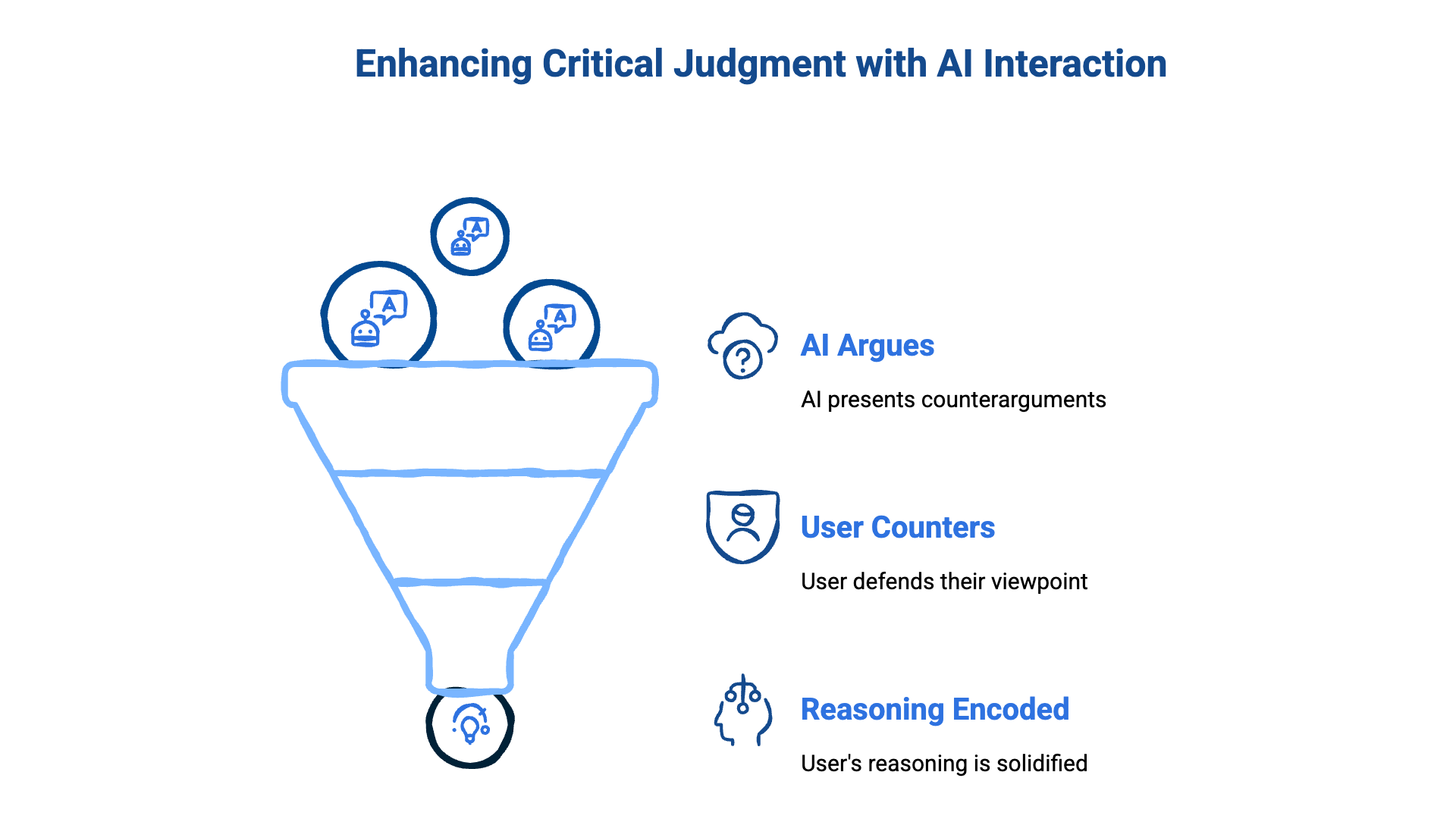
Stanford calls it the oversight paradox. When AI explains something smoothly, your critical thinking shuts down. You trust it without questioning.
Stop asking AI to validate your thinking. Make it argue. Trying to understand a complex topic?
I believe intermittent fasting improves brain function and memory. Act as a skeptical neuroscientist and give me three reasons this might be wrong, with specific evidence I should consider.The AI argues. You counter. That friction encodes the reasoning into memory. Microsoft tracked this. Teams using AI as validation showed measurable declines in critical judgment within six months. Teams that challenged it stayed sharp.
Rule three: close the tab, write from memory
Purdue proved this. Passive reading yields 15% retention. Active retrieval yields 80%. Most people read AI output, paste it, and remember nothing ten minutes later.
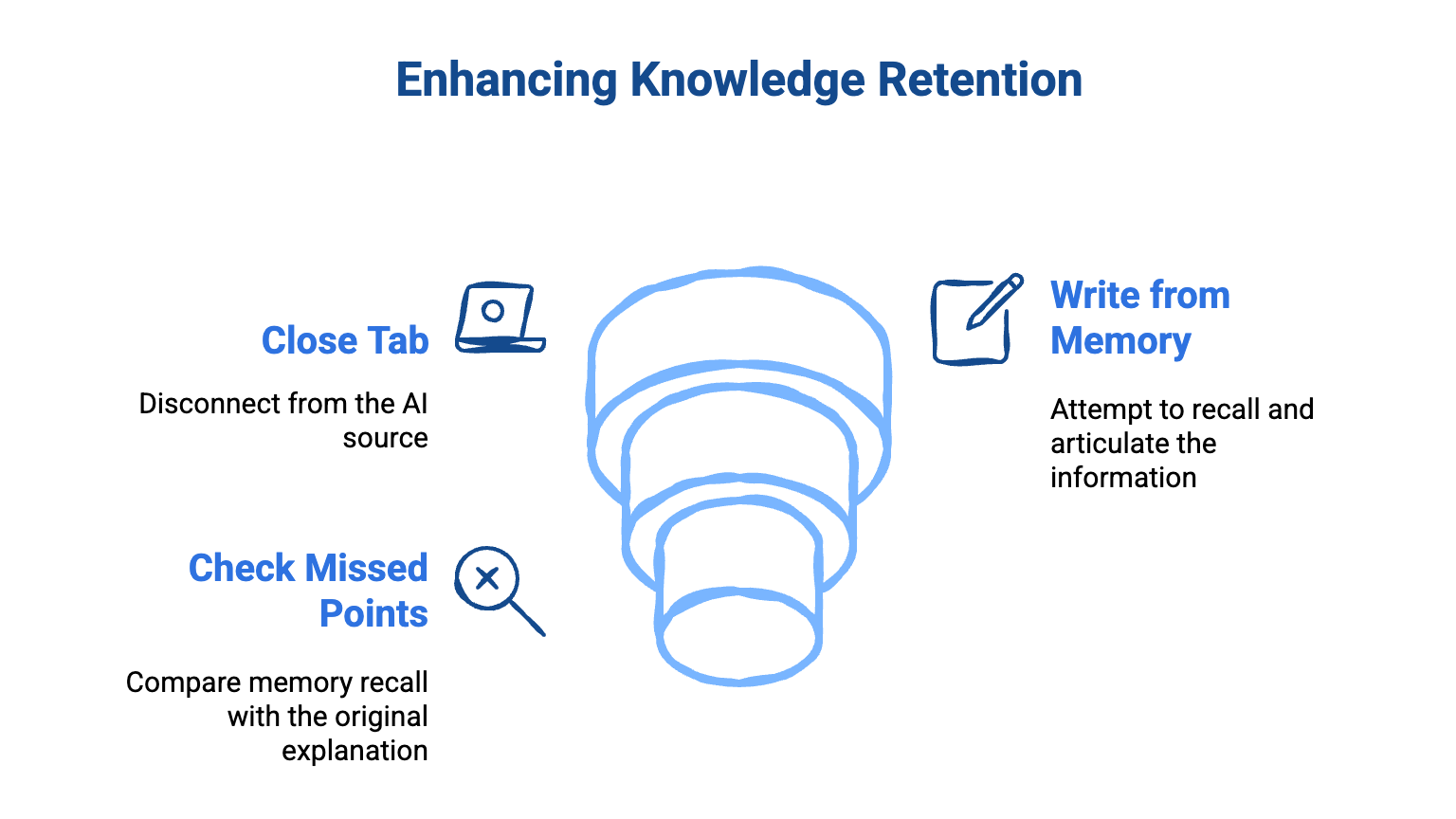
Ask ChatGPT to explain something you want to remember. Read the explanation. Now close the tab. Write it from memory. No peeking. Then reopen and check what you missed.
Your brain treats information as disposable unless you make it work to retrieve it. Skip the effort, rent the knowledge. Do the work, own it.
The test
Pick one habit. Try it in your next AI session. Brain dump before you prompt. Make it argue. Close the tab and recall. You will notice the difference by Friday.
The danger is not that AI gets things wrong. The danger is that it sounds so right, your brain stops firing.
See you at Limitless Live,
Kamil
 | A guest post by
|
The overall principle is that you still need to exercise your brain in some form or shape. There needs to be mental effort in order to work that muscle. 🧠 💪
AI can fill in the gaps and do the grunt work, but that gives you the opportunity to think of higher-level problems and achieve more; not do the same with less.
I use active retrieval in all my learning. It truly is magical how much you remember when you keep asking yourself to remember then checking what you missed.