
Learn faster and remember more by asking one question
A simple shift that turns effort into knowledge that lasts


Hi Kwik Brain, in this edition you’ll learn:
The one question that turns reading you forget into learning that sticks
A five-minute test to know if you truly understand something or only think you do
Three small things to try this week, each takes a few minutes
By the end you’ll know how to make what you read stick, instead of forgetting it by next week.
If asking better questions is a skill worth keeping,
HI-OS is the 12-week system built to train it.

A physicist walked onto Australian television in 1962 holding a piece of chalk and a few props from his kitchen. No slides. No handout to file away. Just a question he asked over and over: why is it so?
The show ran for more than twenty years. An episode someone re-uploaded recently crossed nearly a million views. Not nostalgia. People keep watching because his method still beats most of what companies spend billions on now.
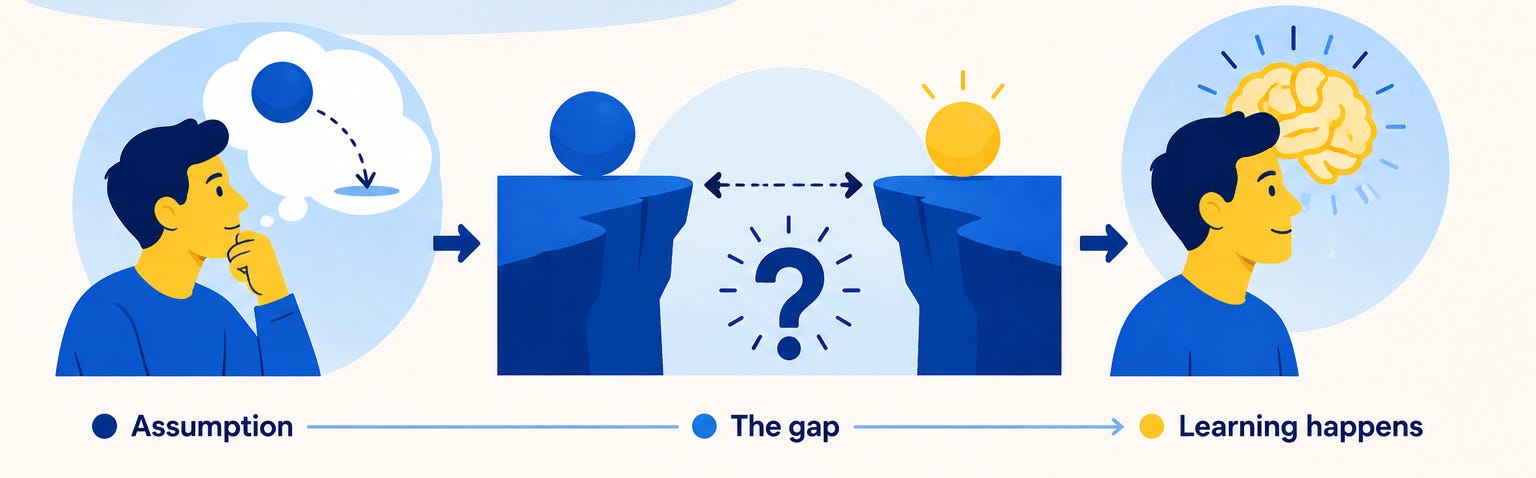
He never gave you the answer. That was the trick. He made you feel the gap between what you assumed and what was happening in front of you, then left you sitting in it.
That gap is the learning. The moment you feel wrong is the moment your brain changes.
Why you forget most of what you learn
Companies pour over £200 billion a year into teaching their people.
Most of it evaporates. Only 10 to 15 percent of training shows up as better performance on the job, and one estimate puts the yearly waste in the US at $164 billion.
As much as 90 percent of corporate learning never changes how people work.
The cause isn’t a weak memory or a lazy mind. It’s how the learning gets delivered.
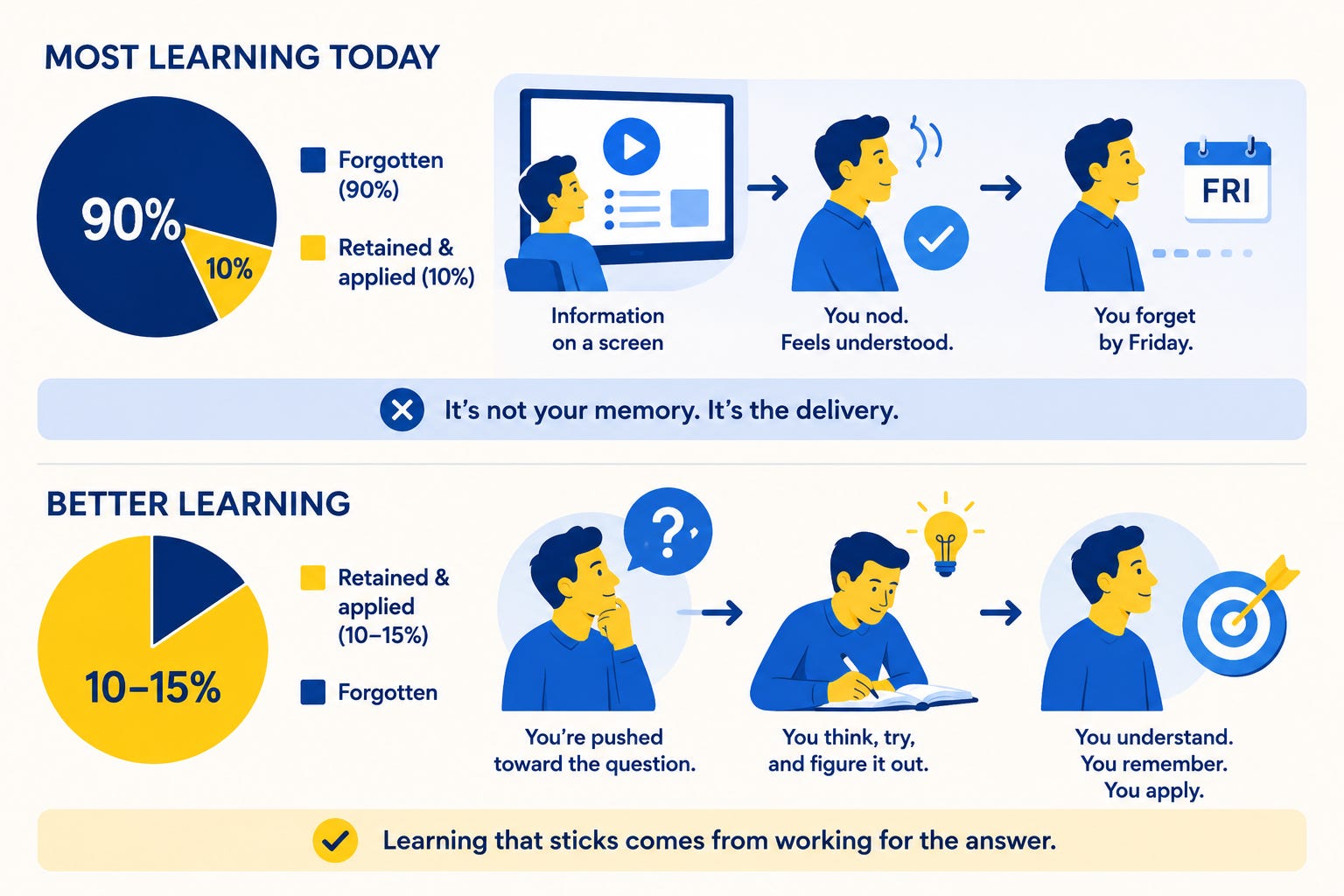
Someone puts the information on a screen and calls it understanding. You nod. You forget by Friday. His teaching flipped that script. A teacher’s job is to push you toward the question, not hand you the answer.
Think of the book everyone told you to read, the one you can’t sum up in a sentence three weeks later. You highlighted it. You agreed with it. You never had to work for any of it, so none of it stayed.
The one question that changes this
You have spent your life collecting answers. The answer was never the asset. The question is.
Every time you accept “that’s just how it is,” you skip the one step where learning happens.
So take any claim you get handed, in a meeting, a book, a headline, and ask: why is it so? Then refuse the first answer. The first answer is the surface. Ask again.
People who skip this pay for it. Curiosity drives sharper decisions and better problem-solving, yet only 24 percent of organizations encourage it.
The famous corporate collapses didn’t run out of cash. They ran out of questions, treating yesterday’s wisdom like settled fact.
Why this works: watch your gut answer fall apart
Every demonstration on that 1962 show did the same thing to the audience. It still works on you.
Picture a ball rolling from a high point down to a lower one a few feet away. Which track gets it there first, a straight ramp or a curved one? Most people say straight. The curve wins. It drops hard at the start, builds speed, and beats the straight line every time. The fastest route is not the straight one. The plan that looks most sensible on paper is rarely the one that arrives first, so pressure-test it before you commit.
Now take your phone. Flip it spinning around its long axis or its short one and it stays steady in the air. Flip it around the middle axis and it tumbles, no matter how clean your throw. Physicists call that the intermediate axis. Being a little bit of everything is that middle axis. It feels balanced. It’s the shakiest place to stand, so pick a lane.
One more. Hang a few weights on strings of the same length and they swing in lockstep, heavy or light, no difference. Shorten one string and that weight speeds up. Length runs the whole system, nothing else. Before you overhaul ten parts of your routine, find the one that actually moves the result and start there.
None of that comes from memorizing. It comes from asking why and being willing to look foolish on the way.
The five-minute test for real understanding
Want to know if you understand something? Explain it to a child.
If you reach for jargon, you don’t understand it yet. Complexity is a sign of incomplete understanding, not a hard subject. Strip the idea down to plain words, find the exact spot where you stumble, then go relearn that spot. The stumble is your gap.
And when learning feels hard, the problem is the method, not your brain. Bad methods burn hours and hand you nothing. The right question turns the same hour into something you keep.
What to do this week
Each takes a few minutes. Pick one and start today.
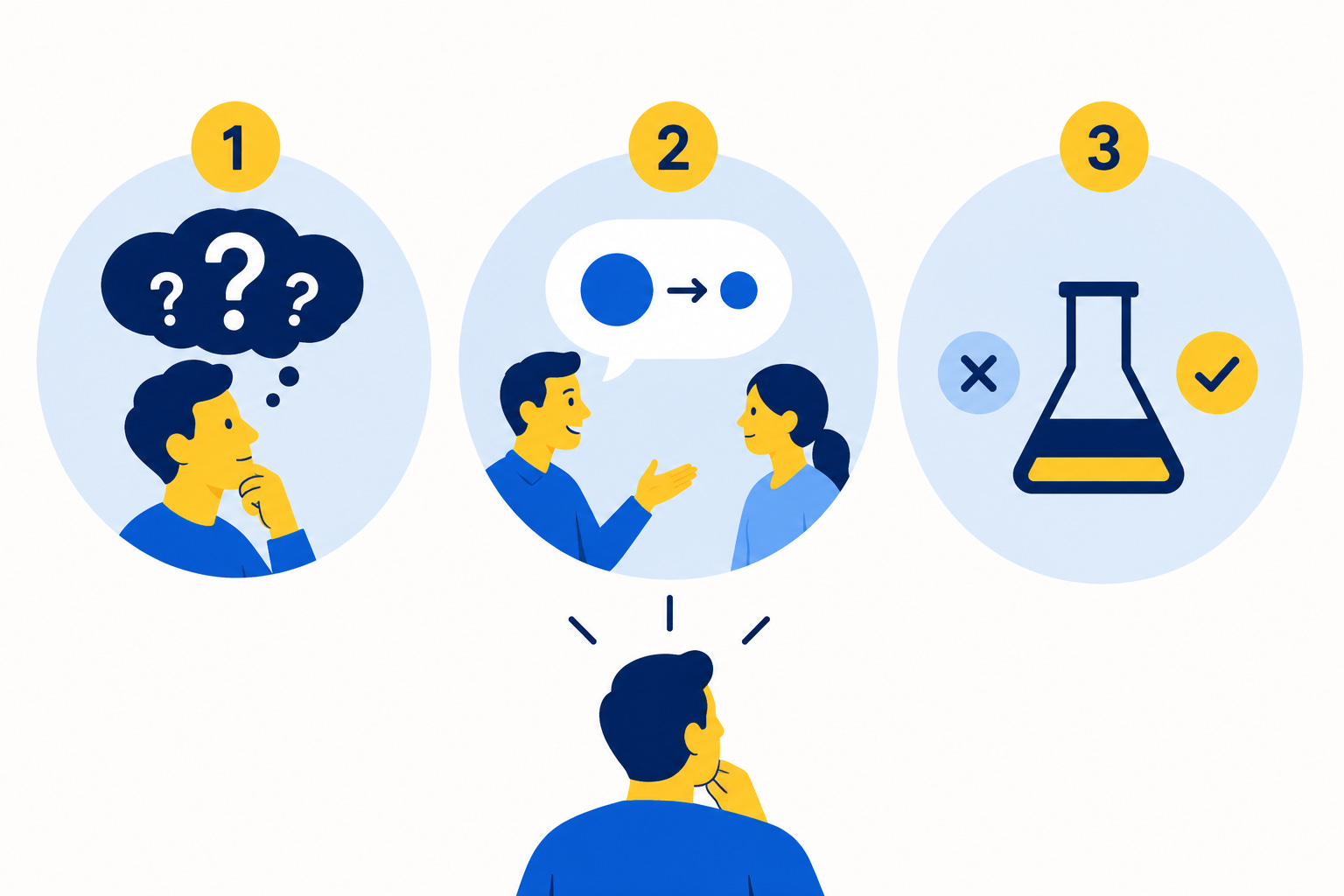
Ask “why is it so?” three times. Take one thing you believe about your work and question it three layers deep. You’ll hit “I have no idea” fast. That blank spot is where the learning starts.
Teach it to someone with no background. Explain something you learned this week in plain words, no jargon. Wherever you get stuck is the part you don’t understand yet. Go back and fix that part.
Change one thing, not everything. When a result surprises you, isolate a single cause and test only that. Most expensive mistakes come from blaming the wrong thing.
And the next time someone hands you a confident answer, question the frame before you accept it.
Ready to train how you think, not just what you know?
HI-OS opens its founding cohort now.
The smartest people never stop asking
You were taught that confusion means you failed. Flip that. Confusion is the sound of your brain working.
The fastest learners aren’t sitting on a pile of answers. They’re the ones still asking why is it so, long after everyone else got comfortable.
So, what have you stopped questioning?
Yes, it's often the quality of the questions we ask, not the amount of questions.
Loved it! The power of experimentation, and questioning, are both critical aspects of the learning process. Applied physics is definitely the easiest way to show, but think about applying questioning in the workplace...