

Every task you dodge is teaching your brain something
The behavior loop that makes procrastination worse over time, and the one sprint that breaks it

Hi Kwik Brain,
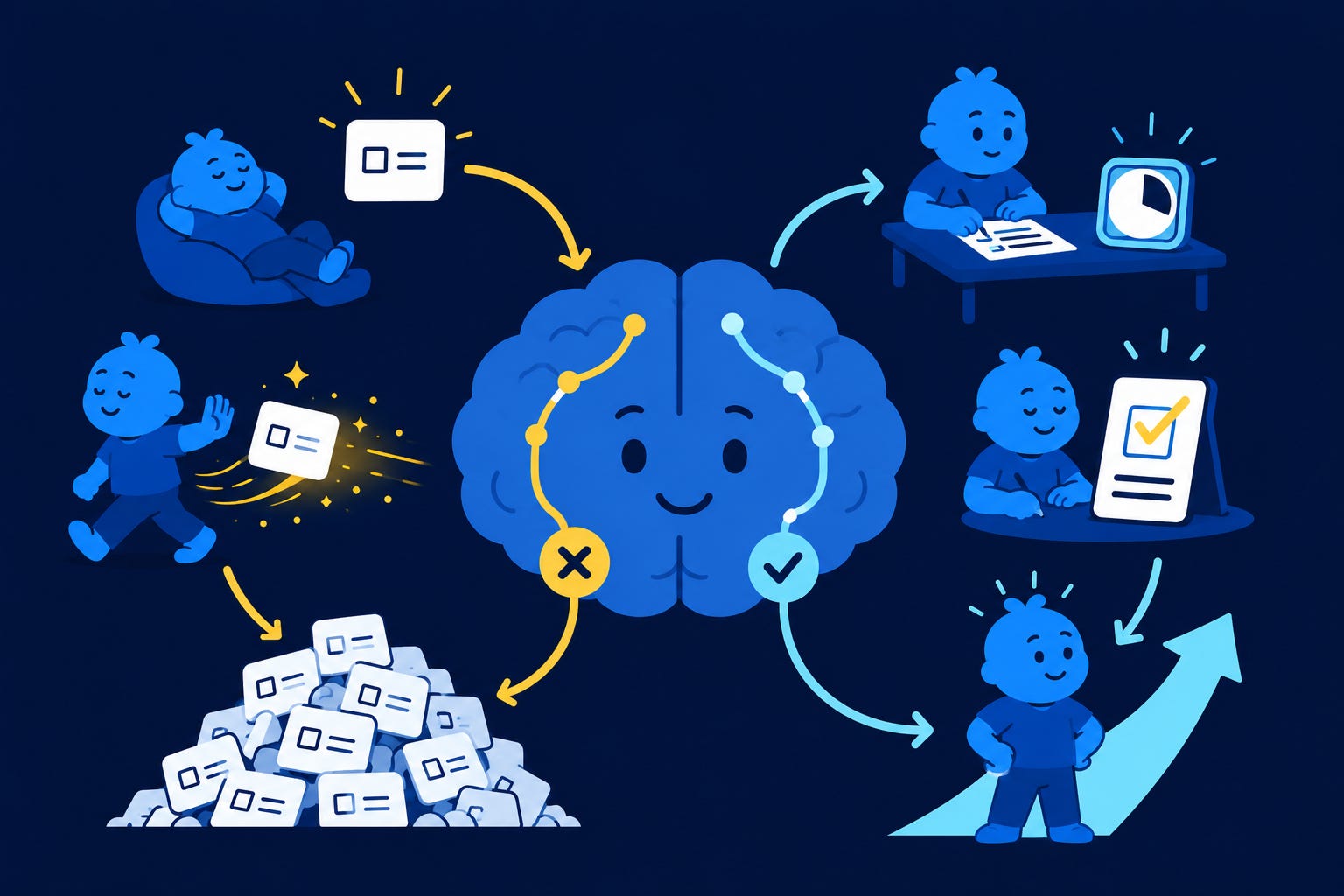
Skipping a task hands your brain a reward. Relief. The next time that same task shows up, your brain remembers the shortcut and reaches for it again.
Here’s how that loop actually works, and the ten-minute sprint that breaks it.
Quick one before we get into it: Limitless Live 2026 tickets just opened, two days training the six cognitive skills that make you impossible to replace. Details here
Relief trains you to avoid
Procrastination runs on mood repair. Boredom, anxiety, frustration, and self-doubt all push you toward avoidance, and avoidance improves your mood immediately even as it costs you later.
You close the tab, put the file down, or open a different app, and the discomfort drops within seconds. That drop is the whole mechanism. Your brain registers that avoidance worked, and it gets more likely to choose avoidance again the next time this task shows up.
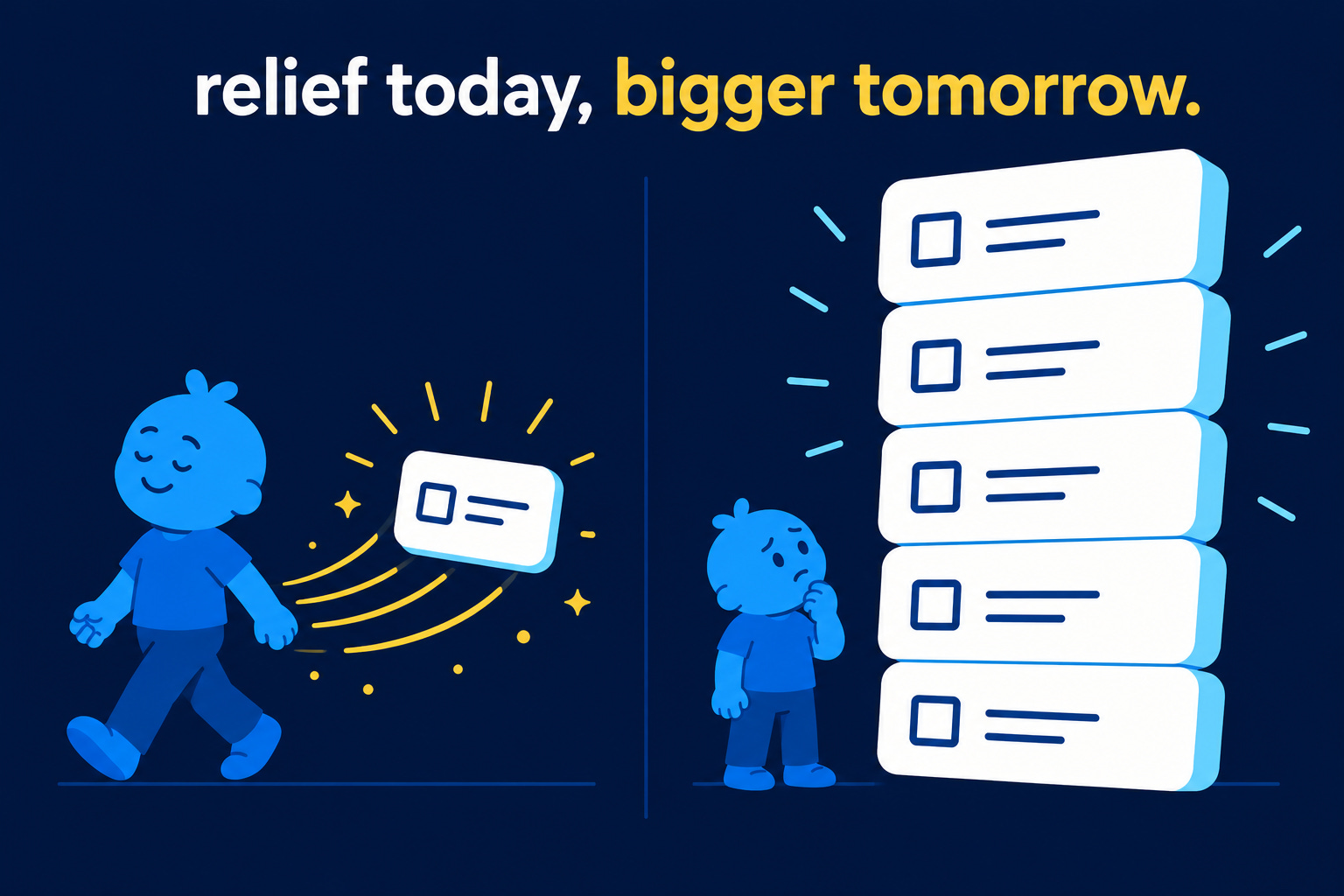
Each dodge makes the task feel bigger next time, because your brain now files it as something worth escaping.
You’ve heard this explained as two brain regions fighting for control, a fear center against a logic center. That story oversimplifies it and skips the part you can actually change.
What repetition actually builds
Finishing something hands your brain proof: this is doable. Avoiding it hands over the opposite proof.
Confidence in your own ability to follow through is one of the clearest predictors of whether you procrastinate at all, according to a large analysis of procrastination research. Raise that confidence and avoidance drops. Lower it, and the next hard task feels bigger before you’ve even opened it.
One completed action beats any mood shift or burst of willpower. It resets what your brain expects from the next one.
The math behind a stalled task
Motivation moves with four factors. Once you know which one is broken, you know exactly what to fix.
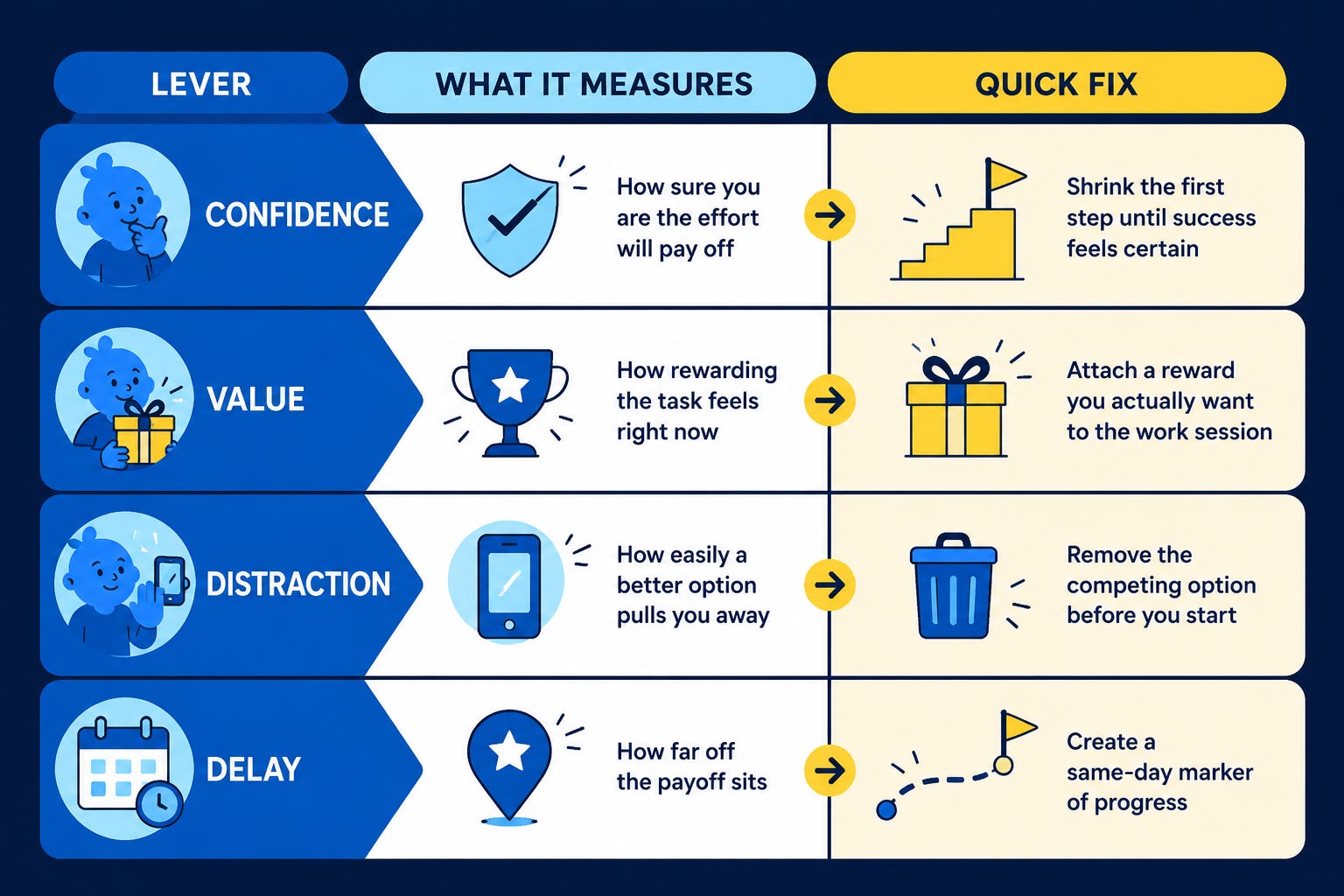
When confidence is low or the payoff sits weeks away, motivation collapses on its own, no matter how much you want to start. Fix the number that’s broken and motivation moves with it.
One sprint reverses it
Action creates confidence. Waiting for confidence first just keeps you stuck.
That’s the reversal most advice gets backward. Waiting to feel ready keeps the loop running. Starting anyway breaks it.
Here’s the sprint:
Name what you’re feeling in one sentence, set a timer for ten minutes, and do the smallest visible piece of the task, the first sentence, the first call, the first line of code. When the timer ends, log what you finished.
The sprint proves you can start. That’s worth more than feeling ready. Ten minutes of visible progress beats an hour of waiting to feel ready.
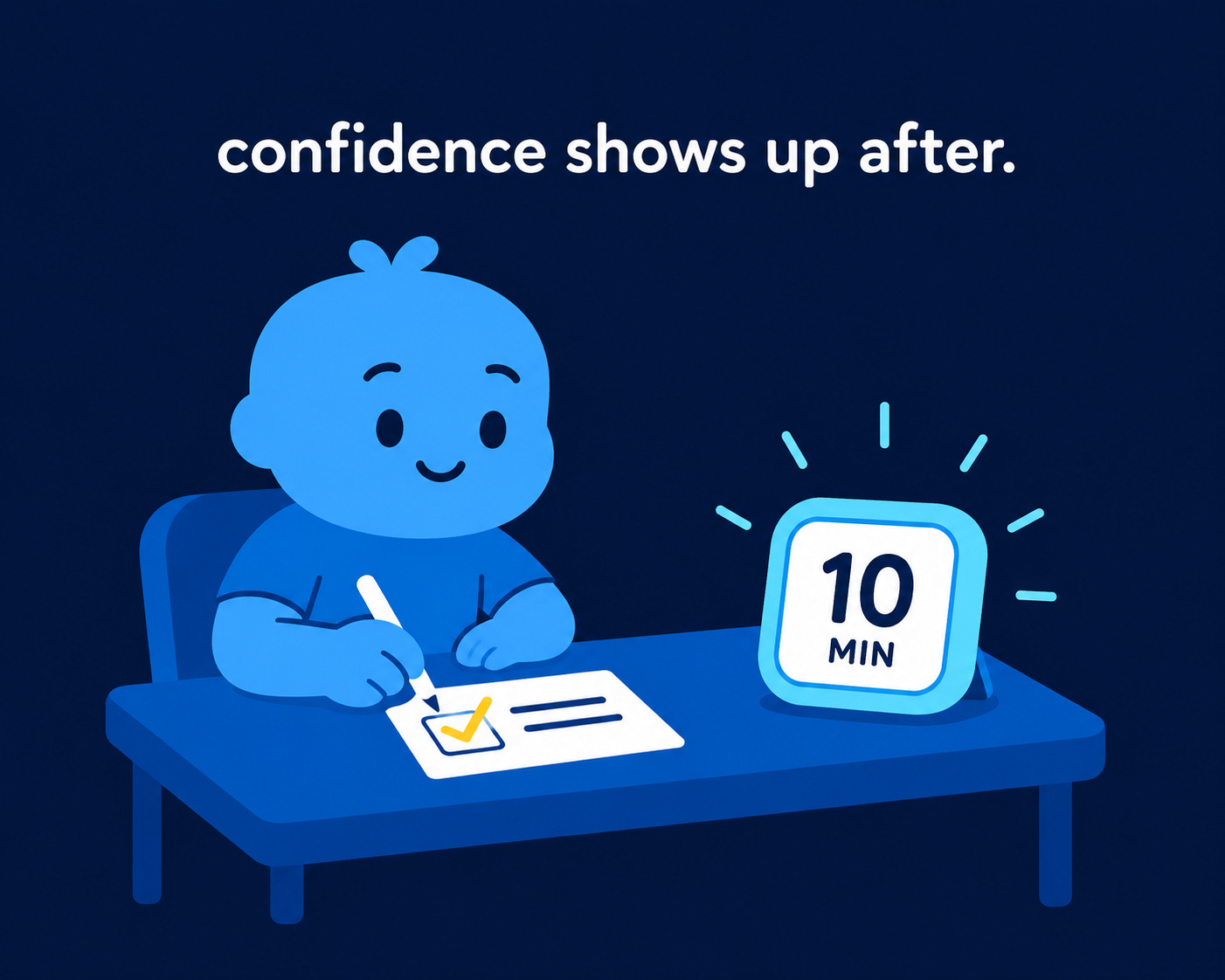
Run this sprint once today, on the task you’ve dodged the longest. Do it again tomorrow, before the feeling has a chance to talk you out of it.
Every avoided task trains you to avoid the next one. A finished sprint trains you to start faster next time. Pick which one you want repeating by the end of today.
This is extremely helpful! Procrastination due to fear has always been my stumbling block. This ten minute practice and then recording the step is working well! Thank you!!
I use sprints all the time as a writer. It never occurred to me to include a reflection piece. Brilliant!
As I continue to work on self-trust and building confidence, the practice of starting has proven to be very effective.
Thanks for this concise layout of key concepts that work❣️